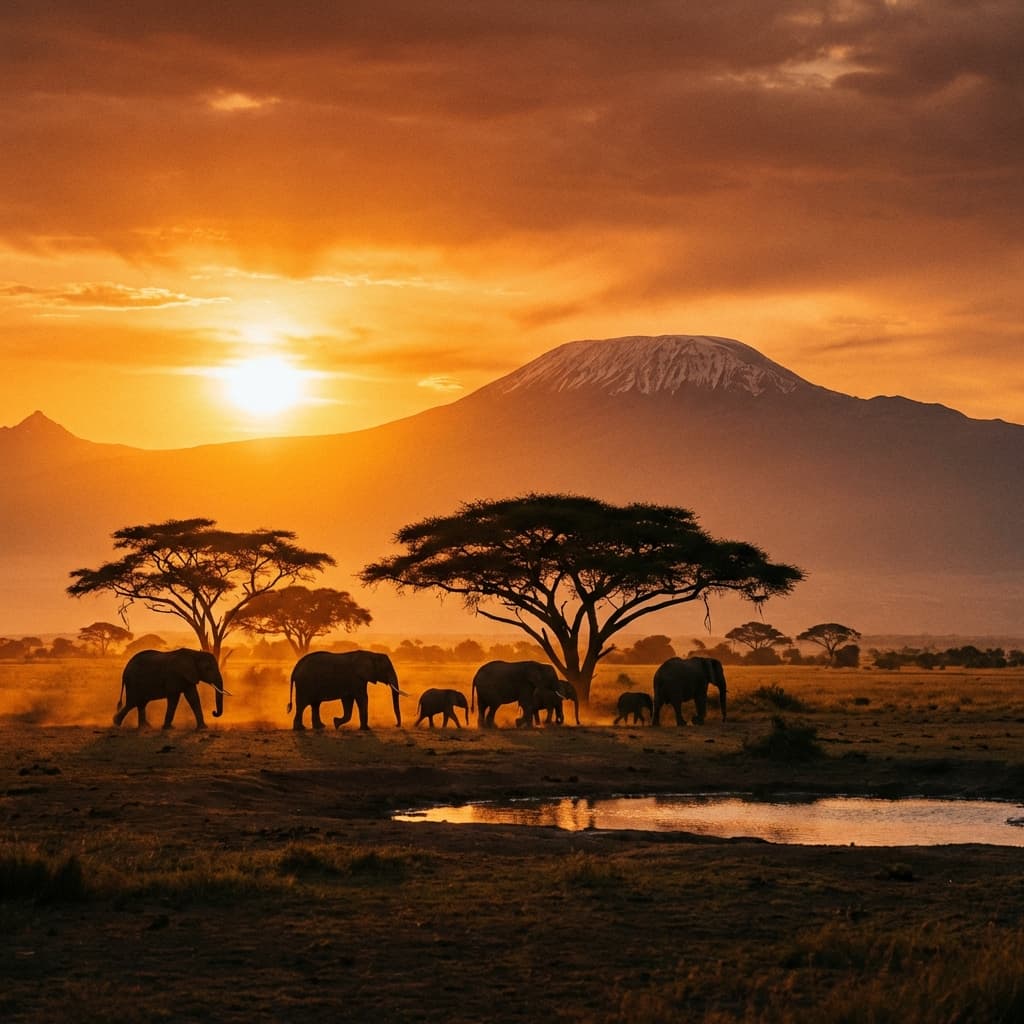
From private conservancies to golden-hour game drives, here's how we design safari days that feel effortless.
Why a Safari Is Never Just a Safari
There is a version of a Kenya safari that looks like everyone else's — the minivan, the crowded viewpoint, the tick-box itinerary. Then there is the version we build for our clients: deliberate, unhurried, and shaped entirely around how you want to spend your days in the wild.
The difference starts long before you arrive at the airstrip.
Private Conservancies vs. National Parks
Most visitors go straight to the national parks, and for good reason — the Maasai Mara and Amboseli deliver on their reputation. But the private conservancies that border and buffer these parks offer something the parks cannot: exclusivity. Vehicles are limited by law. Night drives are permitted. Guided walking safaris are possible. You can track a pride of lions on foot with a ranger who has known that pride for a decade.
We work with properties in Ol Pejeta, Laikipia, and the private conservancies bordering the Mara specifically because they allow a quality of experience that the main circuit does not. If you are travelling as a couple or a small family and the idea of sharing a sighting with seventeen other vehicles makes you uneasy, a private conservancy is where we will start your itinerary.
The best wildlife moment of our trip was not the lions. It was sunrise on a walking safari in the Laikipia plateau — no engine noise, no other people, just us and our guide and the sound of the highland wind.
— Client, February 2025
Building the Day Around Light
Professional photographers have known for years that the hour after sunrise and the hour before sunset are when the bush transforms. The light is warm, the animals are active, and the sky does things that midday simply cannot compete with. We structure game drive timing to make the most of both windows — which means a 5:30 am departure is not a hardship, it is the point.
Between drives, the best camps keep you genuinely comfortable: a shaded veranda, a reading chair, a lunch that feels unhurried. A well-designed safari day has rhythm. Rush is the enemy of good wildlife encounters.
What We Actually Look for in a Camp
We visit properties before we recommend them. The criteria matter:
- Guide quality — is this camp's guiding team permanent staff or seasonal hire?
- Vehicle ratio — how many vehicles per guide, and are the game-drive vehicles open-sided?
- Location — is the camp on a wildlife corridor, or positioned for a view at the cost of game density?
- Sustainability — how does the camp relate to the surrounding community and land?
The lodge with the most impressive pool photograph is not always the lodge with the best safari. We know the difference, and we will tell you plainly.
Designing Your Safari
Every itinerary we build starts with a conversation. How many days do you have? Are you travelling with children? Is the Great Migration on the list, or is this more about open landscape and slow travel? Do you want to add a beach extension in Diani or Zanzibar?
We put together a tailored proposal — usually within 48 hours of your first inquiry — that covers property selection, routing, and a day-by-day breakdown. There is no obligation, and we enjoy the process of building an itinerary that fits your life.